
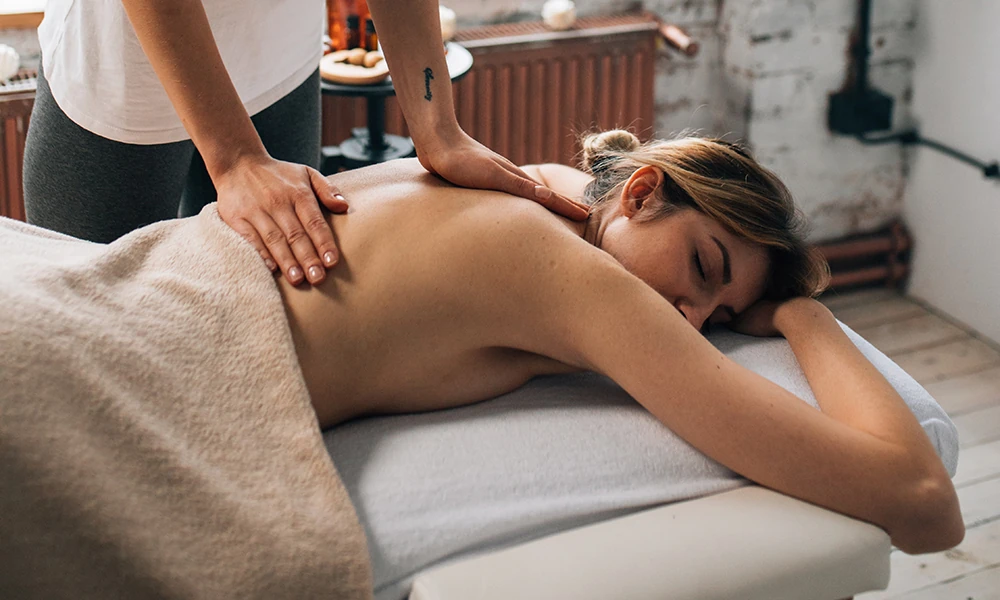

The body in itself has a natural lymphatic drainage system that continuously moves under the skin. This guide explains how face massage can aid this natural process which already takes place. This overview can be used by anyone, who may be curious about the relation between massage and the lymphatic system.
Understanding the body’s natural lymphatic system
The natural movement is the flow of fluid in the form of the lymphatic system which is transported by a system of vessels and nodes in the whole body. This system depends partially on the movement and circulation of the muscles as opposed to a pump. The understanding of this natural process will aid in explaining the possible usefulness of external support modalities, such as massage.
How massage works alongside natural drainage
Face massage does not substitute the lymphatic system; however, it might assist in the maintenance of its natural activity. Light exercises are believed to promote fluid that is already flowing along the existing routes. This difference can be used to explain why the approach can be classified as supportive but not corrective. Take into account how massage can be used in combination with natural drainage:
- Following natural pathways: The movements of the massage strokes usually go in the direction in which the fluids already flow.
- Encouraging gentle stimulation: Soothing pressure can mostly aid in pushing inert sections without causing fluid movement.
- Supporting nearby lymph nodes: Local areas around the neck and collar bone can often be included as the nodes are often found in the locality.
- Working with, not against, the body: The techniques are modeled to support, as opposed to dominating natural processes.
Why direction matters in facial massage
The motion of lymphatic fluid is a relatively uniform general direction in the face and neck. This natural course is believed to be more helpful to work in harmony than to act against it. The concept of this allows one to understand how the emphasis on the direction of the strokes in technique guides is always understood. Take into account the following principles of direction:
- Moving toward the neck: The strokes are usually outwards and downward at the centre of the face.
- Ending near the collarbone: A large number of routines end around the collarbone, where significant lymphatic formations meet.
- Avoiding reversed strokes: Working against the grain is usually deemed to be less helpful.
Lifestyle factors that support natural drainage
Massage is not the only factor out of a variety that can help the lymphatic system of the body to work correctly. Day-to-day habits also influence the effectiveness with which this system is likely to work. The knowledge of these aspects assists in constructing massage in a more realistic context. These lifestyle supporting factors should be taken into account:
- Staying adequately hydrated: Adequate water consumption is frequently cited together with the general lymphatic support.
- Regular physical movement: This can improve lymphatic circulation by enabling indirect exercise to aid in the circulation process.
- Reducing excess sodium intake: Diet is occasionally addressed to be one of the elements of a general retention of fluids.
- Getting sufficient rest: Sufficient sleep is another aspect of general wellness that is typically involved.
Conclusion
Face massage can provide mild assistance to the natural process of lymphatic drainage of the body. Comprehension of this relationship enables realistic and pegged expectations of the practice. Integrating massage with supportive daily habits stays a sensible, balanced technique of overall wellness.
